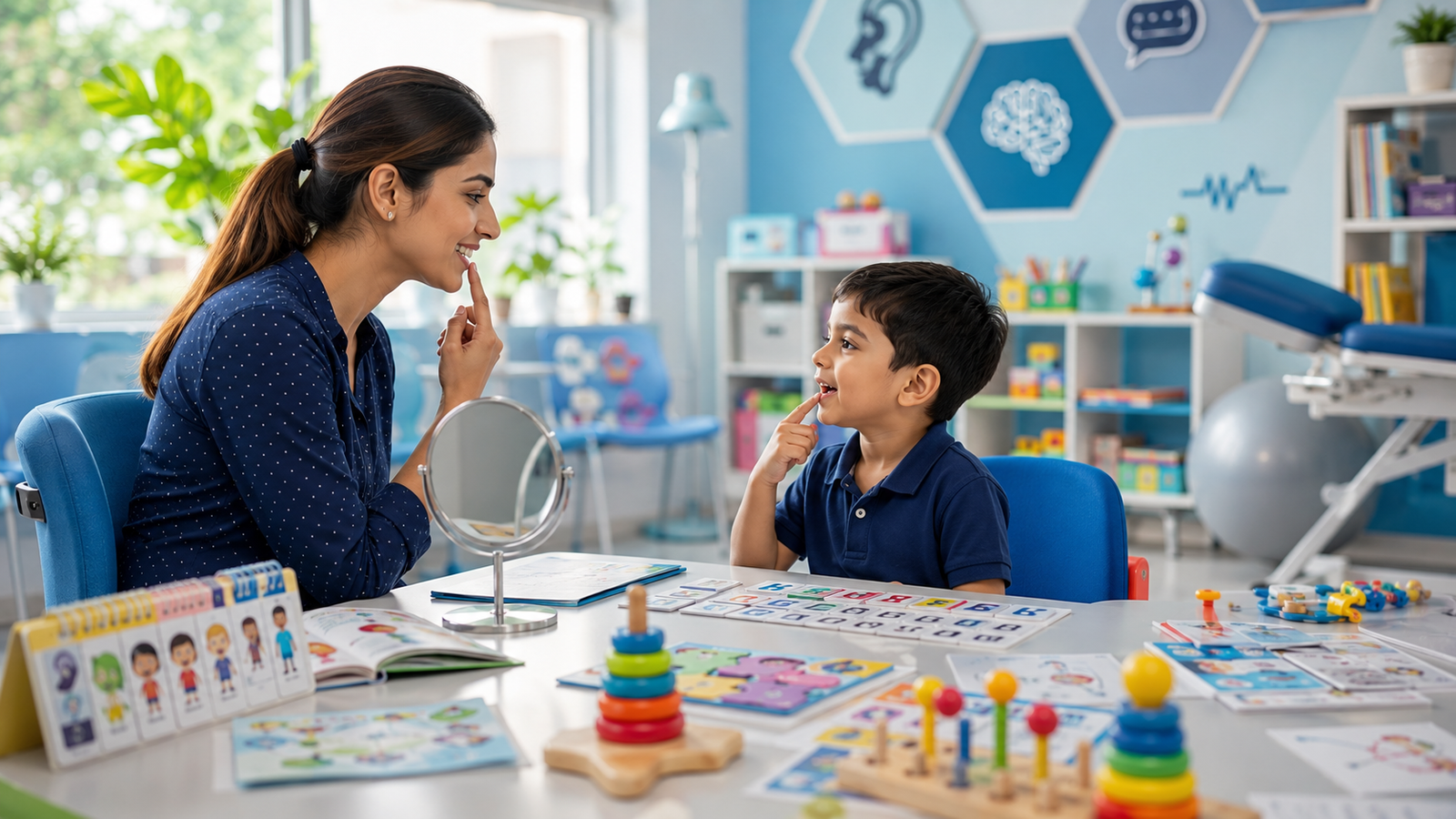
Finding the right Child Speech Therapy in Khordha can be an important step for parents whose children experience difficulties with speech, language, pronunciation, communication, fluency, or social interaction. Speech therapy is not just about helping children pronounce words correctly. It also supports their ability to understand language, express their needs, share ideas, and communicate confidently in everyday situations.
For parents in Khordha and nearby areas, finding a child-focused speech therapy centre can make regular appointments and parent consultations more convenient. Early professional guidance can help families understand their child’s communication development and identify the right support.
IGNITE Speech & Hearing Clinic provides speech therapy services for children along with other child-development-related services. A child-focused approach helps identify individual communication needs and develop therapy goals according to each child’s abilities.
But what is child speech therapy? Which children may benefit from it? What should parents look for when choosing a speech therapy centre in Khordha? And how can families support communication development at home?
What Is Child Speech Therapy?
Child speech therapy, also known as pediatric speech-language therapy, helps children who experience difficulties with speech, language, and communication.
Communication involves much more than speaking words. It includes understanding language, expressing thoughts, following instructions, interacting with others, and communicating needs.
Children may need speech therapy support with:
- Understanding words and instructions
- Learning new words
- Forming words and sentences
- Pronouncing speech sounds clearly
- Expressing needs and feelings
- Answering questions
- Developing conversational skills
- Social communication
- Fluency and stammering
- Voice-related concerns
A qualified speech-language professional assesses the child’s communication abilities and recommends suitable goals based on individual needs.
Every child is different. One child may understand language but struggle to express themselves, while another may speak frequently but have difficulty with pronunciation. Therefore, speech therapy should be personalised rather than following the same exercises for every child.
Why Do Children Need Speech Therapy?
Children develop communication skills at different rates. However, persistent difficulties with speaking, understanding, or interacting may indicate that professional assessment could be helpful.
Parents may consider a speech-language evaluation if their child:
- Has difficulty saying words for their age
- Uses fewer words than expected
- Finds it difficult to combine words into sentences
- Is difficult for others to understand
- Has trouble following simple instructions
- Repeats sounds or words while speaking
- Struggles to express wants and needs
- Has difficulty answering questions
- Finds social communication challenging
- Has communication difficulties associated with developmental conditions
An assessment does not automatically mean that a child needs long-term therapy. It helps parents understand their child’s current communication skills and decide on appropriate next steps.
How Child Speech Therapy Supports Development
Communication plays an important role in learning, relationships, play, and everyday independence. Children use communication to express feelings, ask questions, share experiences, interact with family members, and participate in school activities.
Child speech therapy in Khordha may focus on different communication areas depending on the child’s assessment.
1. Speech Sound and Pronunciation Difficulties
Some children have difficulty producing certain speech sounds clearly.
Parents may notice that their child:
- Mispronounces particular sounds
- Leaves sounds out of words
- Replaces one sound with another
- Is difficult for unfamiliar people to understand
- Struggles to pronounce longer words
A speech-language professional can assess the child’s speech sound development and recommend appropriate activities to improve clarity.
The goal is to help children use sounds accurately in meaningful words, sentences, and everyday conversations.
2. Speech Delay in Children
Speech delay is a common reason parents seek professional guidance.
A child may experience difficulty with:
- Saying their first words
- Learning new vocabulary
- Combining words
- Forming sentences
- Naming familiar objects
- Expressing needs and preferences
- Talking about everyday experiences
If parents are concerned about their child’s speech development, an assessment by a qualified professional can help identify areas that may need support.
Early guidance can provide opportunities to build functional communication skills.
3. Language Development Difficulties
Language includes understanding and using words, sentences, concepts, and communication rules.
Some children experience difficulties with receptive language, which involves understanding what others say.
They may struggle to follow instructions, understand questions, identify objects, understand concepts, or follow stories.
Other children may experience expressive language difficulties, such as finding the right words, forming sentences, describing events, answering questions, or explaining ideas.
Speech therapy can target the specific language skills that affect a child’s daily communication.
4. Speech Therapy for Children with Autism
Autistic children have different communication strengths and needs. Some may speak fluently but experience social communication difficulties, while others may use fewer spoken words or communicate through gestures, pictures, or other communication systems.
Speech therapy can support meaningful communication based on the child’s individual abilities.
Therapy goals may include:
- Expressing wants and needs
- Understanding everyday communication
- Developing functional vocabulary
- Improving conversational skills
- Taking turns during interaction
- Responding to questions
- Developing social communication
- Supporting alternative communication methods when appropriate
The focus should be on helping children communicate effectively and participate in everyday life, rather than measuring progress only by the number of spoken words.
5. Stammering and Fluency Difficulties
Some children experience interruptions in the flow of speech, including:
- Repeating sounds or words
- Stretching sounds
- Getting stuck while speaking
- Unexpected pauses
- Difficulty speaking comfortably
Occasional repetitions can occur during normal speech development. However, persistent or concerning fluency difficulties may benefit from professional evaluation.
A speech-language professional can assess the child’s fluency and recommend appropriate support. Parents should avoid pressuring children to speak faster or telling them to stop stammering.
6. Social Communication Skills
Social communication involves using language and other communication methods during interactions.
Children may need support with:
- Starting conversations
- Taking turns
- Maintaining a conversation
- Responding to others
- Asking for help
- Understanding conversational cues
- Participating in group activities
Speech therapy may use play-based and structured activities to support practical social communication skills.
7. Voice-Related Difficulties
Some children experience persistent hoarseness, unusual voice quality, vocal strain, or other voice concerns.
These difficulties should be assessed by appropriate medical and speech-language professionals because they can have different causes. Therapy may be recommended when appropriate to support healthy voice use.
8. Speech Therapy for Children with Developmental Delays
Developmental delays can affect communication in different ways. A child may experience difficulties with speech, language understanding, vocabulary, play communication, or following instructions.
Speech therapy may form part of an early intervention or multidisciplinary support plan.
The therapy goals should be based on the child’s assessment and developmental needs.
9. Communication Support for Children with ADHD
Some children with ADHD may experience difficulties with listening, organising thoughts, following multi-step instructions, or maintaining conversations.
Speech-language support may be helpful when a child also has communication or language difficulties that affect daily participation. Speech therapy is not a universal treatment for ADHD; support should be based on the child’s individual needs.
How Does a Child Speech Therapy Assessment Work?
Before starting a therapy programme, a speech-language professional needs to understand the child’s communication strengths and difficulties.
An assessment may include:
Speech Sounds: How clearly the child produces different speech sounds.
Receptive Language: How well the child understands spoken language and instructions.
Expressive Language: How effectively the child communicates through words and sentences.
Fluency: How smoothly the child speaks.
Voice: Voice quality, pitch, and loudness when relevant.
Social Communication: How the child communicates and interacts with others.
Functional Communication: How effectively the child expresses needs, feelings, ideas, and information in everyday situations.
The assessment may involve parent discussions, observation, structured activities, and standardised tools when appropriate. The findings help guide the therapy plan.
Why Individualised Speech Therapy Matters
Every child has a different communication profile. A single therapy approach cannot meet every child’s needs.
For example, one child may understand language well but have difficulty pronouncing certain sounds. Another child may pronounce words clearly but struggle to understand instructions or form sentences.
Their therapy goals should be different.
Individualised child speech therapy focuses on the skills that matter most to each child. This makes therapy more meaningful and connected to everyday communication.
What Should Parents Look for in a Child Speech Therapy Centre in Khordha?
Choosing a speech therapy centre is an important decision. Parents should consider more than location or advertising claims.
Here are some factors to check:
Qualified Speech-Language Professionals
Ask about the professional’s education, qualifications, experience, and work with children.
Proper Communication Assessment
The centre should understand the child’s communication abilities before recommending therapy goals.
Individualised Therapy Plans
Therapy activities and goals should be selected according to the child’s needs.
Child-Friendly Environment
A comfortable and supportive environment can help children participate more confidently.
Parent Guidance
Parents should receive clear information about therapy goals and ways to support communication at home.
Progress Monitoring
The child’s development should be reviewed periodically, and goals should be updated when needed.
Multidisciplinary Support
Some children may benefit from coordination between speech therapy, occupational therapy, behavioural support, special education, audiology, or medical professionals.
Convenient Location
A centre that is reasonably accessible from home can make regular appointments easier to manage.
Why Early Speech and Language Support Is Important
Parents sometimes wait because they believe their child will start talking automatically. Although children develop at different rates, persistent communication concerns should not be ignored.
A professional assessment can help parents understand whether their child is developing communication skills as expected and whether additional support may be beneficial.
Early support can provide opportunities to develop functional communication, improve participation, and help children express themselves more comfortably at home, school, and in social environments.
Making Speech Therapy Engaging for Children
Children often learn through play, interaction, and everyday experiences. Therefore, child speech therapy may include activities such as:
- Picture cards
- Storybooks
- Puzzles
- Toys and pretend play
- Songs and rhymes
- Turn-taking games
- Naming activities
- Conversation games
- Storytelling
- Interactive communication activities
Every activity should have a clear therapeutic purpose. For example, picture cards may support vocabulary, storytelling may develop sentence formation, and turn-taking games may encourage social communication.
The Role of Parents in Child Speech Therapy
Parents play an important role in supporting communication beyond therapy sessions.
Simple daily routines can create opportunities for children to communicate.
- Talk about food, colours, and actions during mealtimes.
- Read picture books and discuss what is happening in the story.
- Use simple sentences during play.
- Give children time to respond.
- Encourage children to express their needs using their preferred communication method.
- Follow the home strategies recommended by the speech-language professional.
Parents should avoid forcing children to repeat words continuously. Positive interaction and consistent communication opportunities can make practice more natural.
Speech Therapy Alongside Other Child Development Services
Some children may need support from more than one professional.
Depending on their individual needs, speech therapy may work alongside:
- Occupational therapy
- Behavioural therapy
- Special education
- Audiology and hearing assessment
- Physiotherapy
- Developmental and medical services
- Psychology
- Feeding support when clinically appropriate
For example, a child with communication and sensory difficulties may benefit from coordinated speech therapy and occupational therapy.
A multidisciplinary approach can help address different areas of development while keeping the child’s individual goals at the centre of care.
IGNITE Speech & Hearing Clinic – Child Speech Therapy Support
IGNITE Speech & Hearing Clinic provides speech therapy services for children and offers other child-development-related services, including occupational therapy, behavioural therapy, and special education.
A child-focused approach can help families understand communication concerns, identify suitable goals, and receive guidance according to the child’s needs.
Parents looking for Child Speech Therapy in Khordha can contact IGNITE Speech & Hearing Clinic to enquire about assessment, available services, therapist availability, and appointment schedules.
Before visiting, please confirm the current clinic location and service availability directly with the clinic.
Frequently Asked Questions About Child Speech Therapy in Khordha
1. At what age can a child start speech therapy?
There is no single age that applies to every child. If parents have concerns about speech or language development, a qualified speech-language professional can assess the child and guide them on whether support is appropriate.
2. Is speech therapy only for children who cannot speak?
No. Speech therapy can support children with pronunciation difficulties, speech delay, language difficulties, stammering, social communication challenges, and other communication needs.
3. Can speech therapy help children with autism?
Yes. Speech therapy can support autistic children with functional communication, understanding language, expressing needs, social interaction, and alternative communication methods when appropriate.
4. How long does child speech therapy take?
The duration depends on the child’s communication needs, therapy goals, response to intervention, and consistency of practice. The therapist can provide more individualised guidance after assessment.
5. Can parents support speech development at home?
Yes. Parents can support communication through everyday conversations, shared reading, play, songs, and the home strategies recommended by the therapist.
6. Does speech therapy help with pronunciation?
Yes. Speech therapy may help children who have difficulty producing particular speech sounds clearly. The therapist first assesses the child’s speech sound development and then recommends suitable activities.
7. How do I choose the right speech therapy centre in Khordha?
Look for qualified professionals, appropriate assessment, individualised goals, parent guidance, progress monitoring, and a supportive environment. Confirm the centre’s location and appointment availability before visiting.
Final Thoughts
Finding the right Child Speech Therapy in Khordha can be an important step for parents who are concerned about their child’s communication development.
Speech therapy can support children with speech delay, pronunciation difficulties, language challenges, stammering, social communication difficulties, autism-related communication needs, and other speech-language concerns.
Every child develops differently, and the right support begins with understanding the child’s individual communication strengths and needs.
If you have concerns about your child’s speech or language development, consider arranging a professional assessment.
Contact IGNITE Speech & Hearing Clinic to enquire about child speech therapy services and available appointments.
Website: https://gloignitehealthcare.com/
Phone: 9337055243
