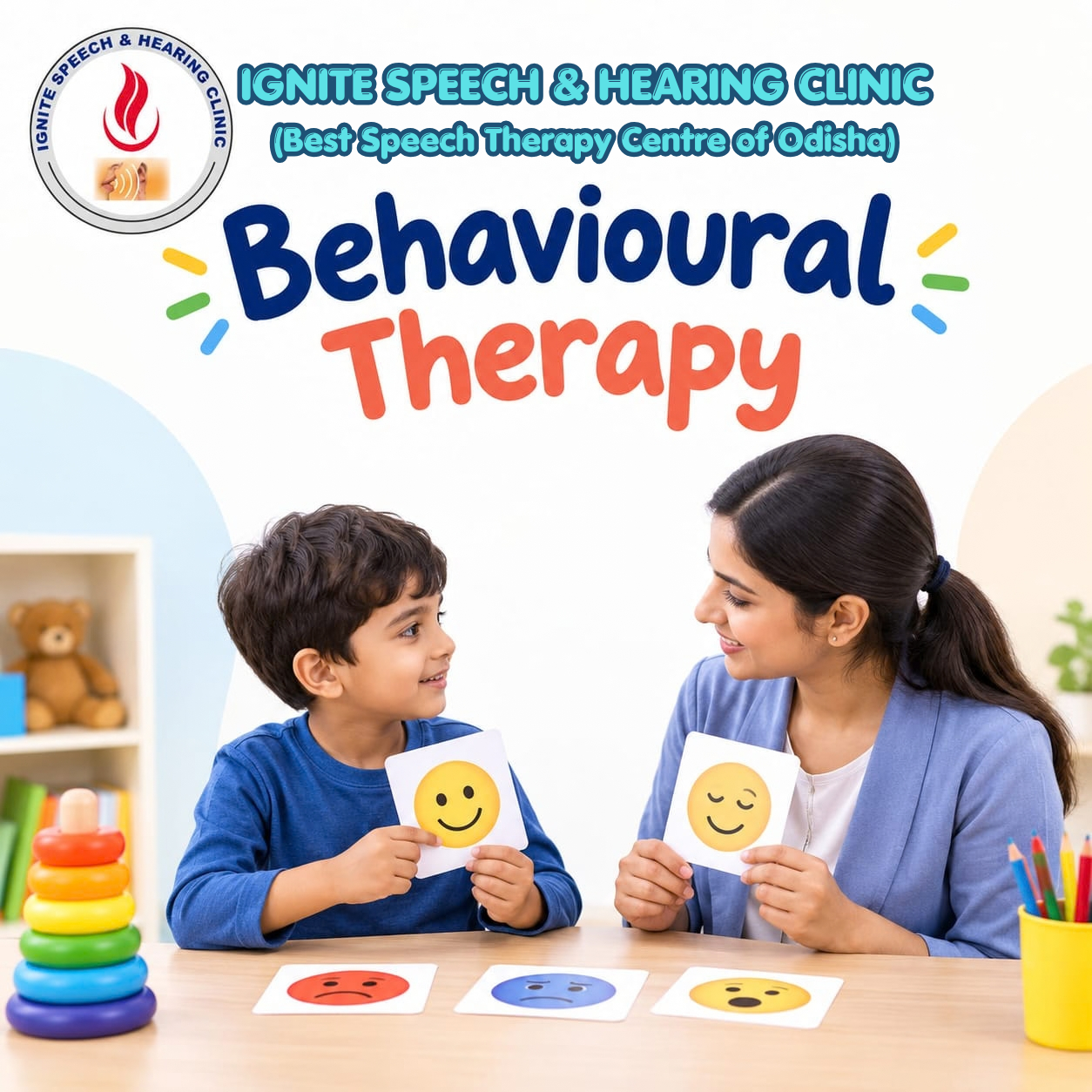
Finding the Best Behavioural Therapy Centre for Kids in Berhampur can be an important step for parents who want to support their child’s communication, emotional regulation, social interaction, learning, and everyday behaviour.
Some children may need additional support with following routines, expressing their needs, managing frustration, interacting with others, or adapting to changes in their environment. Individualised behavioural therapy can help children practise functional skills through structured activities and positive, supportive strategies.
IGNITE Speech & Hearing Clinic offers developmental and therapeutic services, including behavioural therapy, speech therapy, occupational therapy, autism treatment, and cognitive therapy. These services can help families explore appropriate support based on their child’s individual developmental needs.
For parents searching for behavioural therapy for kids in Berhampur, understanding how therapy works, which children may benefit, and how families can participate in the process can help them make informed decisions.
What Is Behavioural Therapy for Children?
Behavioural therapy is an approach that helps children learn useful skills, develop routines, and participate more comfortably in everyday activities. Depending on the child’s needs, therapy may use structured learning, play-based activities, positive reinforcement, visual supports, communication strategies, and parent guidance.
The purpose is to understand the reasons behind a behaviour and identify supportive ways to address the underlying needs. A child may have difficulty following instructions, transitioning between activities, expressing frustration, waiting for a turn, or completing daily tasks.
Behavioural therapy should be individualized according to the child’s age, abilities, communication style, developmental needs, and family priorities. It should promote safety, learning, autonomy, and meaningful participation rather than relying on fear, punishment, or pressure to suppress harmless behaviours.
Parents can visit the “official IGNITE Speech & Hearing Clinic website” (https://gloignitehealthcare.com/) to explore the clinic’s available developmental services.
Why Is Behavioural Therapy Important for Kids in Berhampur?
Children develop communication, emotional regulation, social interaction, and self-management skills at different rates. Some children learn these skills through everyday experiences, while others benefit from additional guidance and structured practice.
For families looking for behavioural therapy in Berhampur, support may focus on:
- Developing functional communication skills.
- Learning predictable daily routines.
- Practising social interaction and turn-taking.
- Supporting emotional regulation.
- Managing transitions between activities.
- Increasing participation in learning and play.
- Developing everyday independence.
- Helping parents understand triggers and supportive responses.
The goal is not to make every child behave identically. It is to help each child develop meaningful skills that support their comfort, well-being, relationships, and participation at home and school.
Which Children May Benefit from Behavioural Therapy?
Behavioural therapy may be appropriate for children who experience persistent difficulties with communication, emotional regulation, social participation, daily routines, or learning new skills. An assessment can help determine which strategies are suitable.
- Children with Autism
Some autistic children may benefit from support with functional communication, transitions, daily routines, play, and participation in everyday activities.
Therapy should respect the child’s sensory needs, communication preferences, and autonomy. The focus should be on useful skills and quality of life, not on forcing a child to hide harmless autistic traits.
- Children with ADHD
Children with attention-deficit/hyperactivity disorder (ADHD) may experience challenges with organization, transitions, waiting, task completion, or following routines.
Depending on the child’s needs, behavioural strategies may include clear expectations, visual reminders, predictable routines, positive reinforcement, and appropriate movement breaks.
- Children with Developmental Delays
Children with developmental delays may need extra opportunities to practise communication, play, self-care, following instructions, or interacting with others.
Breaking activities into manageable steps and providing consistent encouragement may help children practise these skills gradually.
- Children Experiencing Emotional Regulation Difficulties
Some children express frustration through crying, shouting, withdrawal, or other behaviours when they feel overwhelmed or cannot communicate their needs.
Support may involve identifying triggers, teaching ways to request help, providing appropriate breaks, and helping caregivers respond consistently.
- Children with Social Interaction Challenges
Some children may find it difficult to initiate interactions, participate in group activities, understand social situations, or take turns during play.
Structured, age-appropriate activities may help children practise these skills while respecting their individual comfort levels and boundaries.
- Children Who Find Daily Routines Difficult
Transitions such as getting ready for school, stopping a preferred activity, eating meals, or preparing for bedtime can be challenging for some children.
Visual schedules, advance warnings, simple instructions, and predictable routines may help make everyday transitions more manageable.
Key Benefits of Behavioural Therapy for Children
The benefits of behavioural therapy depend on the child’s individual needs, goals, and response to support.
Improving Functional Communication
Some children have difficulty expressing discomfort, frustration, preferences, or requests. Behavioural support may help identify these communication needs and teach alternative ways to communicate.
Depending on the child, communication may involve spoken words, gestures, pictures, or communication devices. The objective is to help the child communicate effectively and have their needs understood.
Developing Social Skills
Children may practise skills such as turn-taking, requesting help, participating in shared activities, and communicating preferences.
These activities should be meaningful and appropriate to the child’s developmental level. Children should not be pressured into unnecessary eye contact or interactions that cause distress.
Supporting Emotional Regulation
Emotional regulation involves recognizing feelings and finding suitable ways to respond to them. Children may practise identifying emotions, asking for a break, using calming strategies, or seeking help from a trusted adult.
Understanding the reasons behind distress is important when choosing appropriate support.
Building Everyday Independence
Some children benefit from structured guidance when learning routines such as putting away toys, washing hands, preparing school materials, or completing simple tasks.
Breaking activities into smaller steps and offering encouragement can help children practise these routines at a manageable pace.
Supporting Learning and Participation
Clear instructions, predictable routines, visual supports, and positive reinforcement may help some children participate more comfortably in learning activities.
Strategies should be adapted to the child’s abilities and should not depend on punishment, unrealistic expectations, or excessive demands.
How Does Behavioural Therapy Work at IGNITE Speech & Hearing Clinic?
An individualized approach helps families identify useful goals and understand how to support their child consistently.
Step 1: Understanding the Child’s Needs
The process may begin with a discussion about the child’s development, communication, routines, strengths, and current challenges. Parents can share observations from home, school, and other environments.
Step 2: Setting Individualized Goals
Goals should be practical and relevant to the child’s everyday life. Examples include communicating a need for help, participating in a routine, managing transitions, or learning a new functional skill.
Step 3: Practising Skills Through Structured Activities
Depending on the assessment and therapeutic approach, sessions may involve play-based learning, modelling, visual schedules, task breakdown, and positive reinforcement.
Activities should be age-appropriate, safe, and adapted to the child’s abilities and interests.
Step 4: Parent Guidance
Parents may receive strategies for encouraging communication, supporting routines, recognizing triggers, and practising useful skills at home.
Family participation can create more opportunities for children to use skills in familiar environments.
Step 5: Reviewing Progress
Progress should be reviewed regularly. The therapist and family can discuss what is working, identify ongoing difficulties, and adjust goals when necessary.
For more information, visit the “official IGNITE Speech & Hearing Clinic website” (https://gloignitehealthcare.com/).
Behavioural Therapy and Autism Support in Berhampur
Behavioural therapy may form part of a broader developmental support plan for autistic children. Depending on the child’s needs, support may focus on functional communication, daily routines, transitions, play, safety, and meaningful participation.
For example, a child who becomes distressed when an activity ends may benefit from advance warnings, visual schedules, and a predictable transition routine. A child who has difficulty communicating discomfort may benefit from learning a reliable way to request help or a break.
Therapy should consider sensory differences, communication needs, and possible reasons for distress. It should respect the child’s dignity, preferences, and autonomy.
Behavioural therapy does not cure autism. Its purpose should be to support useful skills, well-being, and participation in daily life.
IGNITE provides autism-related services. Parents can explore the clinic’s “Autism Treatment Services” (https://gloignitehealthcare.com)page to learn more about the support listed by the clinic.
Behavioural Therapy and Speech Therapy: What Is the Difference?
Behavioural therapy and speech therapy have different primary focuses, although some children may benefit from both.
Behavioural therapy may focus on learning functional skills, developing routines, understanding behaviour patterns, and supporting participation in everyday activities.
Speech therapy focuses on communication needs such as understanding language, expressing thoughts, speech sounds, fluency, and functional communication.
For example, a child may benefit from speech therapy to develop ways to communicate their needs and behavioural support to practise using those skills during daily routines.
When appropriate, collaboration between professionals can help align goals across different settings.
How Parents Can Support Behavioural Therapy at Home
Parents and caregivers play an important role in helping children practise skills outside therapy sessions. Everyday routines can provide opportunities for learning and encouragement.
Helpful approaches include:
- Maintaining predictable routines for meals, play, and bedtime.
- Using clear, simple instructions.
- Providing visual reminders when helpful.
- Giving advance warnings before transitions.
- Offering appropriate choices.
- Encouraging functional ways to express needs.
- Recognizing effort and useful skills.
- Identifying situations that cause distress.
- Communicating regularly with the therapist.
Avoid comparing your child with other children or expecting immediate changes. Repeated behaviours may be influenced by communication difficulties, sensory discomfort, fatigue, stress, changes in routine, or unmet needs.
If a strategy increases distress, discuss it with the treating professional and consider an alternative approach.
When Should Parents Consider Behavioural Therapy?
Parents may consider professional guidance when a child consistently struggles with everyday routines, communication, emotional regulation, transitions, social participation, or learning practical skills.
Other concerns may include persistent distress in particular situations, difficulty participating at school, or developmental concerns raised by parents or teachers.
A single behaviour does not automatically mean a child needs therapy. Behaviour can be influenced by age, environment, communication, sleep, stress, and many other factors.
A qualified professional can assess the child’s needs, discuss appropriate options, and recommend further evaluation if necessary.
Choosing the Best Behavioural Therapy Centre for Kids in Berhampur
When choosing a behavioural therapy centre for kids in Berhampur, parents should consider whether the service offers an appropriate, respectful, and individualized approach.
Important factors include:
- Careful assessment of the child’s strengths and needs.
- Individualized and practical goals.
- Respectful, child-centred methods.
- Clear communication with parents.
- Guidance for practising skills at home.
- Regular review of progress.
- Appropriate professional qualifications and experience.
- Coordination with speech therapy, occupational therapy, or other services when needed.
- Clear information about fees, appointments, and available services.
IGNITE Speech & Hearing Clinic lists behavioural therapy and other developmental services. Families interested in behavioural therapy in Berhampur should contact the clinic to confirm current service availability, therapist details, and appointment arrangements before visiting.
Frequently Asked Questions
- What is behavioural therapy for kids?
Behavioural therapy helps children practise functional skills, develop routines, and participate in everyday activities. The approach depends on the child’s individual needs and goals.
- Can behavioural therapy help children with autism?
It may help some autistic children with functional communication, transitions, daily routines, and participation. Support should respect the child’s preferences, sensory needs, and autonomy.
- Is behavioural therapy helpful for children with ADHD?
Behavioural strategies may support routines, organization, task completion, and self-management for some children with ADHD. The appropriate approach depends on the child’s needs.
- How long does behavioural therapy take?
The duration and frequency depend on the child’s goals, needs, response to support, and family circumstances. Progress should be reviewed regularly with the treating professional.
- Can parents participate in behavioural therapy?
Yes. Parent guidance can help families practise suitable strategies during everyday routines and respond consistently to their child’s needs.
- Does behavioural therapy replace speech therapy?
No. The services have different focuses. Some children may benefit from both behavioural therapy and speech therapy, depending on their assessment and goals.
- How can I contact IGNITE Speech & Hearing Clinic in Berhampur?
Visit the official website at https://gloignitehealthcare.com/ or contact the clinic directly to confirm the Berhampur branch details, behavioural therapy availability, and appointment options.
Conclusion
Finding the Best Behavioural Therapy Centre for Kids in Berhampur can help parents explore appropriate support for their child’s communication, emotional regulation, social participation, routines, and everyday learning.
With individualized goals, supportive strategies, parent involvement, and regular progress reviews, children may develop skills that help them participate more comfortably in daily life. The most suitable approach is one that recognizes the child’s strengths, addresses individual needs, and protects their dignity and well-being.
IGNITE Speech & Hearing Clinic offers developmental services, including behavioural therapy, speech therapy, occupational therapy, and autism-related support. Parents can contact the clinic to enquire about available services and discuss the next steps for their child.
Contact IGNITE Speech & Hearing Clinic
Website: https://gloignitehealthcare.com/
Phone: +91 9337055243
Contact IGNITE Speech & Hearing Clinic to enquire about behavioural therapy for children in Berhampur, assessment options, and available appointments.
