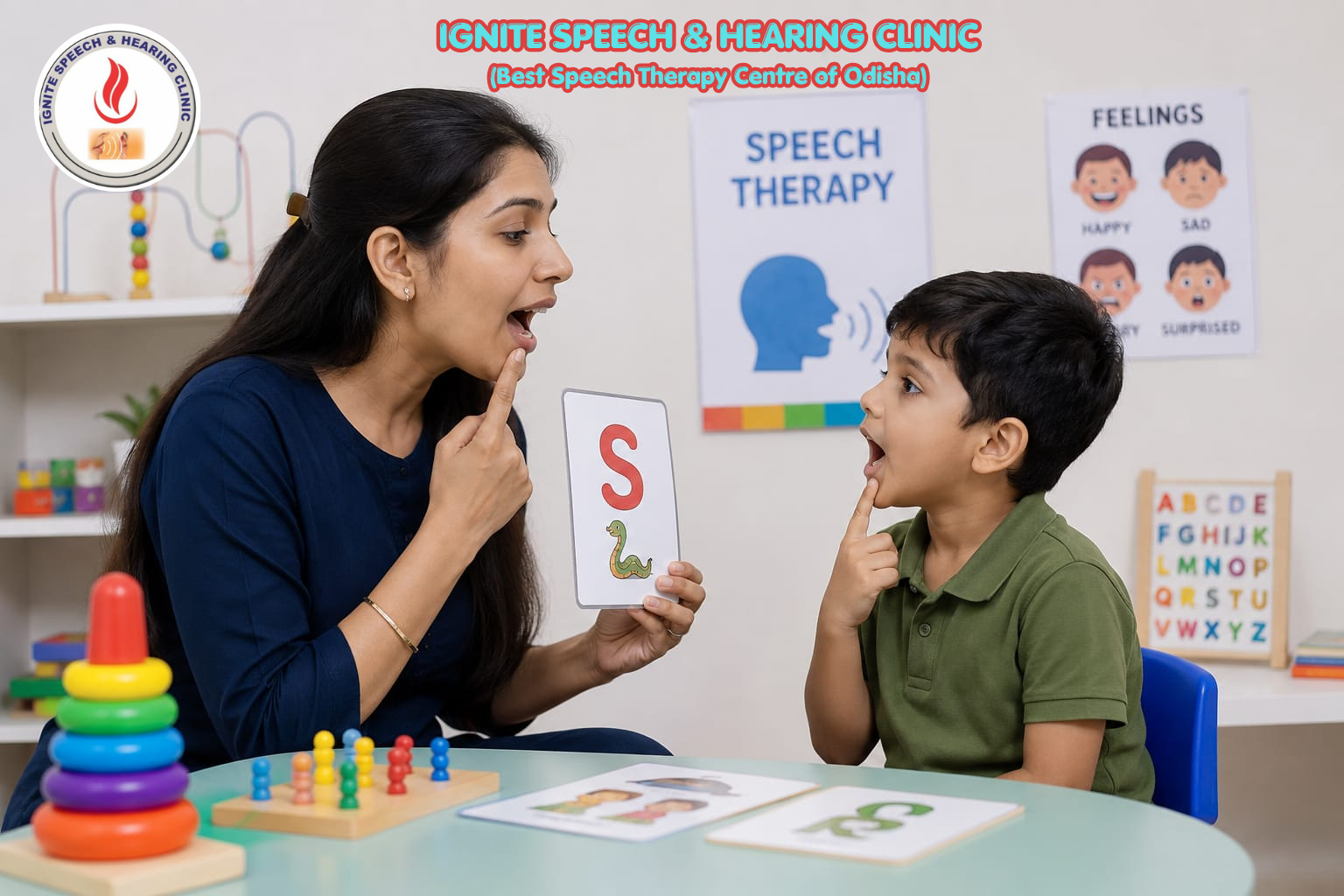
Every child develops communication skills at their own pace. Some children begin speaking early, while others may need additional support to express their needs, understand language, pronounce words clearly, or communicate confidently with family and friends. For parents searching for Child Speech Therapy in Patia, understanding a child’s communication needs is an important first step towards supporting their development.
IGNITE Speech & Hearing Clinic provides speech therapy services for children and supports families seeking guidance for speech, language, and communication concerns. With an individualised, child-focused approach, speech therapy can help children work towards meaningful communication goals based on their abilities and developmental needs.
For families living in Patia and nearby areas of Bhubaneswar, including KIIT, Kanan Vihar, Chandrasekharpur, Damana, and Infocity, finding an accessible speech therapy centre can make regular appointments and parent consultations easier to manage.
But how do parents recognise when a child may need speech therapy? What happens during a speech therapy session? And how can families support communication development at home?
What Is Child Speech Therapy?
Child speech therapy is a specialised service that supports children who experience difficulties with speech, language, or communication.
Communication is more than speaking individual words. It includes understanding others, expressing thoughts, asking questions, following instructions, participating in conversations, and interacting with people in everyday situations.
A child may benefit from speech-language assessment if they experience difficulties with:
- Learning and using new words
- Combining words into sentences
- Pronouncing speech sounds clearly
- Understanding instructions and questions
- Expressing needs, feelings, and ideas
- Answering questions appropriately
- Participating in conversations
- Developing social communication skills
- Managing stammering or other fluency difficulties
- Using communication effectively at home or school
Every child has a different communication profile. A qualified speech-language professional can assess the child’s abilities and recommend appropriate support.
When Does a Child Need Speech Therapy?
Parents are often the first to notice differences in their child’s communication. Some children may use fewer words than expected, while others may speak but struggle to make themselves understood.
Consider seeking a professional assessment if your child:
- Has difficulty communicating wants and needs
- Uses fewer words than expected for their age
- Has difficulty combining words or forming sentences
- Is frequently difficult for others to understand
- Struggles to understand everyday instructions
- Repeats sounds or words or gets stuck while speaking
- Has difficulty participating in conversations
- Shows communication difficulties that affect learning or social interaction
- Loses previously acquired communication skills
These signs do not automatically mean that a child has a communication disorder. However, persistent concerns deserve attention. Parents do not need to wait until a child reaches a particular age or starts school before seeking guidance.
A speech-language assessment can help identify the child’s strengths, understand areas of difficulty, and determine whether intervention is appropriate.
Why Is Child Speech Therapy Important?
Communication is an essential part of childhood development. Children use language to learn, build relationships, express emotions, ask for help, and participate in daily activities.
When communication becomes difficult, some children may feel frustrated or find it challenging to interact with others.
Child speech therapy in Patia can help address individual communication needs through structured, engaging, and age-appropriate activities.
Depending on the assessment, therapy may focus on:
- Developing functional vocabulary
- Improving speech clarity
- Understanding spoken language
- Building sentences
- Expressing thoughts and feelings
- Improving conversational skills
- Supporting social communication
- Increasing confidence in everyday communication
The purpose is not simply to encourage children to speak more. It is to help them communicate in ways that are meaningful and useful in their daily lives.
Speech Therapy for Speech Delay
Speech delay is a common reason parents seek professional guidance.
A child with communication difficulties may have trouble saying their first words, learning new vocabulary, combining words, or expressing basic needs.
For example, a child may understand familiar routines but struggle to communicate what they want. Another child may use gestures to express needs but use relatively few spoken words.
A speech-language professional can assess receptive and expressive language skills and identify appropriate therapy goals.
Activities may include naming familiar objects, learning action words, practising simple phrases, sharing attention during play, and using communication during everyday routines.
Parents should remember that children develop differently. If you are concerned about your child’s speech development, an assessment can help clarify the next steps.
Speech Therapy for Pronunciation Difficulties
Some children know what they want to say but have difficulty producing certain sounds clearly.
Parents may notice that their child:
- Leaves sounds out of words
- Replaces one sound with another
- Has difficulty pronouncing particular sounds
- Is difficult for unfamiliar listeners to understand
- Struggles to say longer or more complex words
Speech therapy can help children develop clearer speech when an assessment identifies a need.
A therapist may use pictures, toys, games, and structured speaking activities to practise specific sounds. As the child progresses, practice can move from individual sounds to words, sentences, and everyday conversations.
Therapy goals should be appropriate for the child’s age, language background, and individual speech development.
Speech Therapy for Language Development
Language involves both understanding and expressing information.
Receptive language refers to understanding words, questions, instructions, and conversations. Children who experience receptive language difficulties may struggle to follow directions or understand what others are saying.
Expressive language refers to communicating through words, phrases, sentences, gestures, or other communication methods. Children with expressive language difficulties may struggle to describe events, answer questions, explain ideas, or tell stories.
Child speech therapy may support both areas through activities such as:
- Picture identification
- Vocabulary-building games
- Following simple instructions
- Sentence-building exercises
- Storytelling and sequencing
- Answering age-appropriate questions
- Describing objects and everyday experiences
The therapist selects activities based on the child’s communication abilities and specific goals.
Speech Therapy for Children with Autism
Autistic children have different communication strengths and needs. Some use spoken language fluently but experience difficulties with social communication, while others communicate using a few spoken words, gestures, pictures, or augmentative and alternative communication systems.
Speech therapy can support autistic children in developing functional communication that respects their individual needs.
Possible goals include:
- Expressing needs and preferences
- Understanding everyday language
- Developing useful vocabulary
- Communicating during play
- Taking turns during interactions
- Asking and answering questions
- Participating in conversations
- Exploring alternative communication methods when appropriate
The focus should be on helping the child communicate effectively, not forcing eye contact or requiring speech when another communication method better meets the child’s needs.
When necessary, speech therapy may be coordinated with occupational therapy, behavioural support, special education, and other developmental services.
Speech Therapy for Stammering and Fluency Difficulties
Stammering, also called stuttering, can affect the flow of speech. A child may repeat sounds or words, stretch sounds, or experience moments when speaking feels difficult.
Some repetitions occur during typical speech development. However, persistent concerns, visible speaking effort, distress, or avoidance of talking may warrant professional assessment.
A speech-language professional can evaluate the child’s fluency and recommend suitable support.
Parents can help by listening patiently, allowing the child time to finish speaking, maintaining a relaxed conversational pace, and avoiding criticism or pressure to speak perfectly.
The aim is to support comfortable communication and confidence.
How Does a Child Speech Therapy Session Work?
A speech therapy programme usually begins with an assessment of the child’s communication abilities and concerns.
The assessment may include:
1. Parent discussion: The professional asks about the child’s communication development, daily routines, concerns, and relevant history.
2. Communication observation: The therapist observes how the child understands language, expresses needs, interacts, and communicates during suitable activities.
3. Assessment of specific skills: Depending on the child’s needs, the assessment may examine speech sounds, vocabulary, sentence formation, fluency, and social communication.
4. Individualised goal setting: The therapist identifies appropriate goals based on the assessment findings.
5. Therapy and progress review: Activities are selected to address the child’s goals, and progress is reviewed periodically.
Not every child needs the same assessment or therapy plan. The process should be tailored to the child’s age, abilities, communication preferences, and needs.
Why Play-Based Speech Therapy Can Help Children Learn
Children often learn effectively through meaningful interaction and play. For this reason, speech therapy may incorporate activities that encourage communication in an enjoyable environment.
Examples include:
- Picture cards and naming games
- Storybooks and storytelling
- Puzzles and matching activities
- Pretend play with toys
- Rhymes and songs
- Turn-taking games
- Everyday object identification
- Simple question-and-answer activities
Each activity should have a clear purpose.
For example, a picture game may encourage vocabulary development, while a storytelling activity can support sentence formation and sequencing. Turn-taking games can create opportunities to practise communication during interaction.
The therapist adapts the activities to the child’s interests and developmental level.
How Parents Can Support Speech Development at Home
Parents play an important role in creating opportunities for communication outside therapy sessions.
Small, everyday interactions can support the skills being developed during therapy.
Talk during daily routines. Describe what you are doing while preparing meals, getting dressed, or organising toys.
Read together. Use picture books to introduce words, discuss characters, and encourage the child to share observations.
Follow your child’s interests. If your child enjoys cars, animals, or building blocks, use these activities to create natural opportunities for communication.
Model useful language. If your child says one word, you can respond with a slightly longer phrase without pressuring them to repeat it.
Give time to respond. Allow your child enough time to communicate using speech, gestures, pictures, or their preferred communication method.
Celebrate communication attempts. Respond positively to efforts to share ideas, ask for help, or express preferences.
Parents should follow the individual guidance provided by the child’s speech-language professional and avoid turning every interaction into a test.
Choosing a Child Speech Therapy Centre in Patia
Choosing a speech therapy centre involves more than considering its location or advertisements. Parents should look for a service that understands their child’s communication needs and provides clear guidance.
When evaluating a child speech therapy centre in Patia, consider the following factors:
Qualified Professionals
Ask about the speech-language professional’s qualifications, training, and experience working with children.
Individualised Assessment
The centre should understand the child’s strengths and areas of difficulty before recommending therapy goals.
Child-Friendly Activities
Activities should be appropriate for the child’s age, abilities, interests, and communication needs.
Parent Guidance
Parents should receive practical suggestions for supporting communication at home.
Progress Monitoring
The therapist should review goals and explain the child’s progress and ongoing needs.
Appropriate Collaboration
Some children may benefit from coordination between speech therapy, occupational therapy, audiology, special education, or medical professionals.
Convenient Access
Families living in Patia, KIIT, Kanan Vihar, Chandrasekharpur, Damana, and Infocity may wish to consider travel time and appointment availability when choosing a centre.
Child Speech Therapy in Patia at IGNITE Speech & Hearing Clinic
IGNITE Speech & Hearing Clinic provides speech therapy services and supports families seeking guidance for children’s communication development.
For parents searching for child speech therapy in Patia, it is important to understand the child’s needs and discuss suitable options with a qualified professional.
Depending on the child’s assessment and individual requirements, speech therapy may address speech clarity, language development, communication difficulties, fluency, and functional social communication.
IGNITE also lists other child-development-related services, including occupational therapy, behavioural therapy, and special education. Where appropriate and available, coordination between professionals can help address different developmental needs.
Parents are encouraged to confirm the current Patia clinic location, therapist availability, appointment timings, and specific services directly with IGNITE Speech & Hearing Clinic before visiting.
Why Early Speech and Language Support Matters
Parents sometimes assume that a child will begin speaking without additional support. Although children develop at different rates, persistent communication concerns should not be ignored.
An early assessment can help parents understand their child’s current abilities and identify suitable next steps. It does not automatically mean that a child needs long-term therapy.
When support is recommended, appropriate intervention can provide opportunities to practise communication skills, participate in daily routines, and interact more effectively with others.
Every child progresses differently, and therapy goals should be reviewed according to the child’s individual development.
Frequently Asked Questions
1. What is child speech therapy?
Child speech therapy supports children who experience difficulties with speech sounds, language development, fluency, or communication. The programme is based on the child’s individual assessment and needs.
2. When should parents consider speech therapy?
Parents should consider an assessment when they have concerns about their child’s speech, understanding of language, ability to express needs, or communication development. A qualified professional can advise whether support is appropriate.
3. Can speech therapy help a child who understands but does not speak much?
An assessment can help determine why the child is using limited spoken language and identify suitable communication strategies. Support may include spoken language development and other communication methods when appropriate.
4. Can speech therapy help autistic children?
Yes. Speech therapy can support autistic children with functional communication, language understanding, vocabulary, conversational skills, and alternative communication methods when needed.
5. How long does child speech therapy take?
The duration varies according to the child’s needs, therapy goals, response to intervention, and opportunities to practise skills. The therapist can discuss an individualised plan after assessment.
6. What can parents do at home to improve communication?
Parents can talk during daily activities, read together, follow the child’s interests, model useful language, allow time for responses, and use strategies recommended by the child’s therapist.
7. Where can parents find child speech therapy in Patia?
Parents can contact IGNITE Speech & Hearing Clinic through its official website to enquire about current service availability, the Patia location, and appointment arrangements.
Final Thoughts
Finding suitable Child Speech Therapy in Patia can be an important step for families who have concerns about their child’s communication development.
Speech therapy can support children with speech delays, pronunciation difficulties, language challenges, stammering, social communication needs, and communication differences associated with autism.
The most important consideration is finding appropriate professional support based on the child’s individual needs.
With assessment, personalised goals, positive family involvement, and consistent opportunities to communicate, children can work towards meaningful progress in their everyday lives.
If you have concerns about your child’s speech or language development, consider arranging a professional assessment with IGNITE Speech & Hearing Clinic to discuss suitable next steps.
IGNITE Speech & Hearing Clinic — Supporting children’s communication, learning, and everyday participation.
